Oral Agents Did Not Match Insulin for Gestational Diabetes Outcomes
In gestational diabetes requiring medication, metformin-first oral therapy with glyburide rescue did not prove noninferior to insulin for preventing large-for-gestational-age birth.
Structured PICO summaries for doctors and healthcare professionals, covering population, intervention, comparison, outcomes, expert commentary, and references across diabetes, endocrinology, obesity, and cardiometabolic medicine.
In gestational diabetes requiring medication, metformin-first oral therapy with glyburide rescue did not prove noninferior to insulin for preventing large-for-gestational-age birth.
In early postmenopausal women aged 50 to 60 years, zoledronate at baseline and 5 years reduced 10-year morphometric vertebral fractures from 11.1% to 6.3%.
In overweight or obese adults with early type 2 diabetes, dapagliflozin added to calorie restriction increased 12-month remission from 28% to 44%.
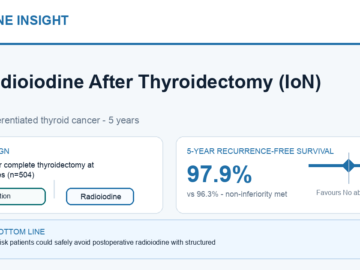
In the IoN non-inferiority RCT, omitting postoperative radioiodine after total thyroidectomy produced 5-year recurrence-free survival of 97.9% versus 96.3% with ablation in selected low-risk thyroid cancer.
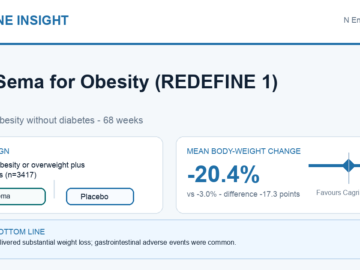
In REDEFINE 1, once-weekly cagrilintide-semaglutide produced 20.4% mean weight loss at 68 weeks versus 3.0% with placebo in adults with overweight or obesity without diabetes.
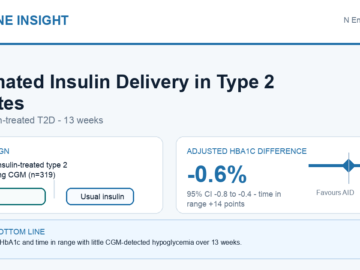
In insulin-treated type 2 diabetes, automated insulin delivery reduced HbA1c by an adjusted 0.6 percentage points and increased time in range by 14 points versus CGM with usual insulin delivery.
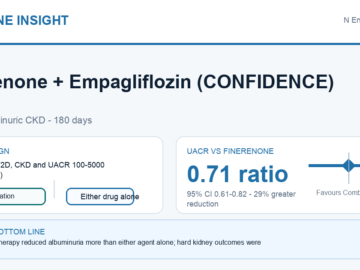
In CKD with type 2 diabetes and albuminuria, simultaneous finerenone plus empagliflozin reduced UACR more than either treatment alone at 180 days, without unexpected safety findings.
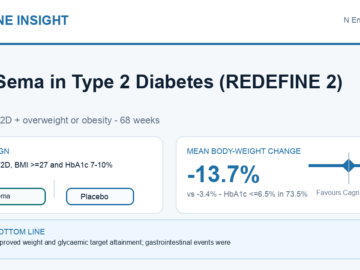
In REDEFINE 2, CagriSema reduced weight by 13.7% versus 3.4% with placebo at 68 weeks, and 73.5% achieved HbA1c <=6.5% in adults with type 2 diabetes.
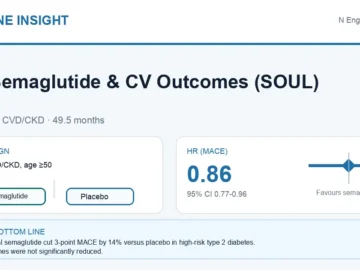
In high-risk type 2 diabetes, once-daily oral semaglutide 14 mg cut major adverse cardiovascular events versus placebo in the SOUL trial, with no kidney benefit shown. PICO summary and expert commentary.
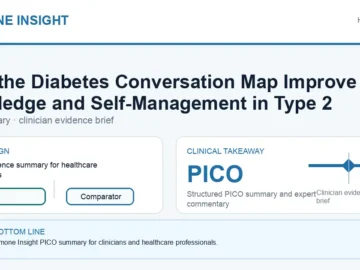
A single-centre Egyptian RCT found the Diabetes Conversation Map programme improved diabetes knowledge, self-management, and self-efficacy questionnaire scores versus standard education (p < 0.001), with no clinical endpoints reported. PICO summary and expert commentary.