

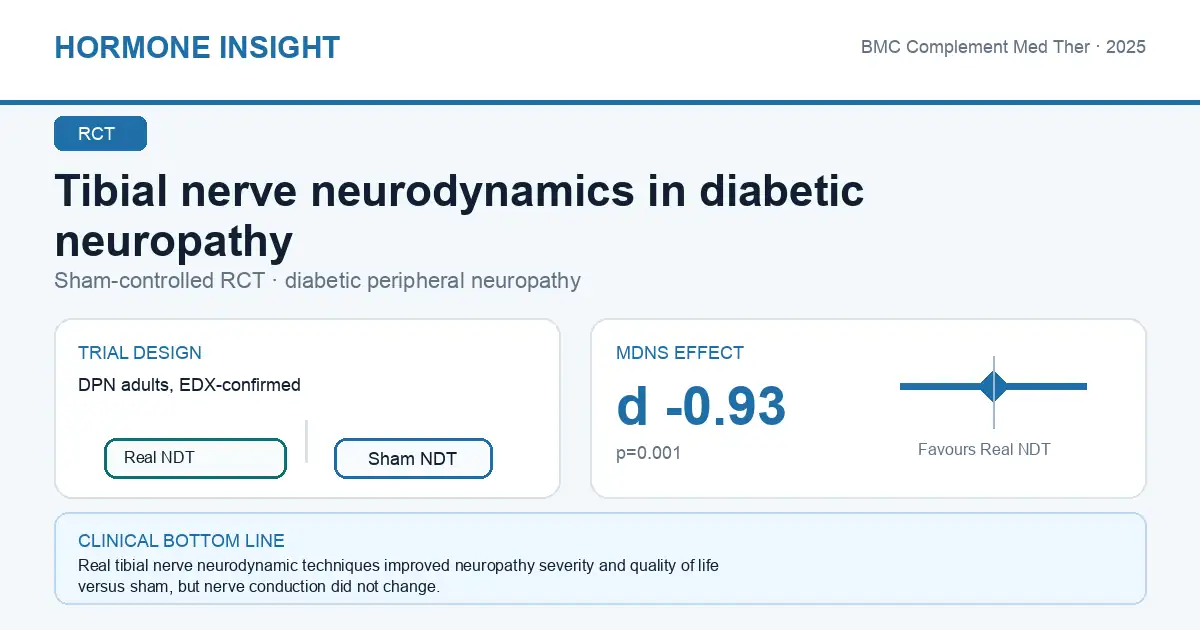
Summary: In a sham-controlled trial in diabetic peripheral neuropathy, adding tibial nerve neurodynamic techniques to basic rehabilitation produced large improvements in neuropathy severity and quality of life, with modest range-of-motion gains, but no change in nerve conduction.
PICO Summary
| Element | Detail |
|---|---|
| Population | 40 adults with electrodiagnostically confirmed diabetic peripheral neuropathy. |
| Intervention | Real tibial nerve neurodynamic techniques plus standardised basic complementary treatment. |
| Comparison | Sham neurodynamic techniques plus the same basic treatment. |
| Outcome | Michigan Diabetic Neuropathy Score improved (MD -4.60; Cohen’s d -0.93; p=0.001, exceeding the MCID), quality of life improved (MD -13.25; d -0.73; p=0.006), modest straight-leg-raise ROM gains. Nerve conduction parameters unchanged. |
Tibial nerve neurodynamics in diabetic neuropathy
Sham-controlled RCT · diabetic peripheral neuropathy
Adding real tibial nerve neurodynamic techniques produced large, clinically meaningful gains in neuropathy severity and quality of life versus sham, but did not change nerve conduction, so the benefit is symptomatic and functional rather than structural.
Expert Commentary
Diabetic neuropathy is a field where drugs disappoint and patients suffer, so a low-risk manual adjunct deserves a fair hearing, and this trial is better built than most of its kind. The use of a genuine sham comparator and reported effect sizes lifts it above the usual small open studies, and the improvements in neuropathy score and quality of life are large and clinically meaningful, not statistical trivia. I read the verdict as cautiously positive, with one honest tension front and centre: nerve conduction did not change at all. That tells me the benefit is symptomatic and functional, likely through mechanosensitivity and neural mobility, not structural repair, so I would never sell it as reversing the neuropathy. Blinding a hands-on therapy is also inherently hard, and the sample is small with no durability data. Can I use this with my patients? Yes, for selected patients troubled by symptoms and reduced quality of life, delivered by a trained physiotherapist as an adjunct, with caution where there is severe sensory loss or ulceration risk. It complements, never replaces, glycaemic control, foot care, and standard neuropathic pain management. I would want a larger trial with longer follow-up.
References
Ashoori M, Hashemi SE, Pourahmadi M, et al. Adding tibial nerve neurodynamic techniques to a rehabilitative pain management strategy improved neuropathy severity and quality of life in patients with diabetic peripheral neuropathy: a randomized sham-controlled trial. BMC Complement Med Ther. 2025;25(1):429. doi:10.1186/s12906-025-05168-3