

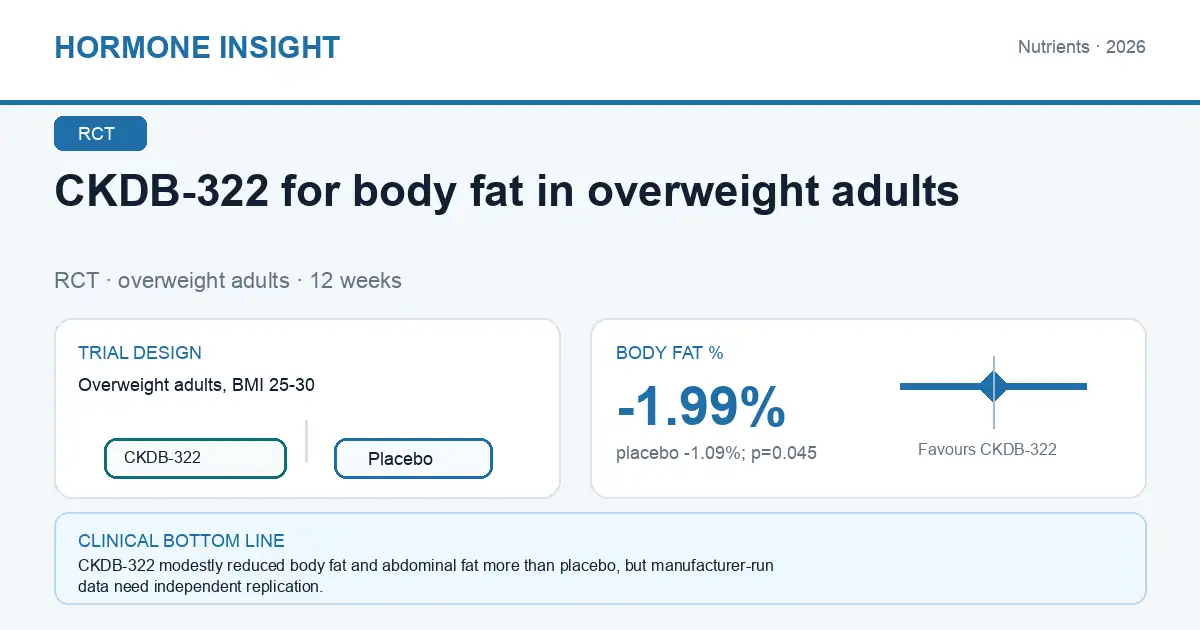
Summary: In a 12-week trial in overweight adults, a probiotic-plus-microalgae supplement (CKDB-322) produced significant reductions in body fat mass, abdominal fat, weight, triglycerides, and leptin compared with placebo, and was well tolerated; the study was manufacturer-conducted.
PICO Summary
| Element | Detail |
|---|---|
| Population | 100 overweight adults aged 19–65 (BMI 25–30, raised waist circumference); double-blind, placebo-controlled randomised trial, South Korea. |
| Intervention | CKDB-322 (1.0 × 10⁹ CFU Lactiplantibacillus plantarum Q180 plus 200 mg Phaeodactylum tricornutum) daily for 12 weeks (n=50). |
| Comparison | Identical-appearance placebo daily for 12 weeks (n=50). |
| Outcome | Significant reductions in body fat mass and body fat percentage (DEXA) and abdominal fat area (CT) versus placebo (p<0.05), with improvements in anthropometry and lower serum triglycerides and leptin. An exploratory microbiome shift was noted. No serious adverse events; well tolerated. |
CKDB-322 for body fat in overweight adults
RCT · overweight adults · 12 weeks
Over 12 weeks CKDB-322 cut body fat mass and percentage more than placebo, with parallel falls in abdominal fat, triglycerides, and leptin. Effects were modest and the trial was manufacturer-run, so independent replication is needed.
Expert Commentary
This is a reasonably designed small trial reporting genuinely measured endpoints, with DEXA and CT rather than scales alone giving the fat-mass and abdominal-fat findings more credibility than typical supplement studies, and the accompanying falls in triglycerides and leptin add biological coherence to a gut-adipose-axis hypothesis. The tolerability was good, which matters for any product aimed at long-term use. My main reservation is interpretive rather than methodological: the trial was conducted by the manufacturer’s research institute, a clear commercial interest that makes independent replication important before the effects are accepted as robust. Beyond that, the sample is modest at 100, the duration is only 12 weeks so durability is unknown, the population is overweight rather than obese which limits extrapolation to higher BMI, and the microbiome analysis is exploratory and compositional. The effect sizes, while statistically significant, should be weighed for real-world clinical meaning. Can I use this with my patients? Cautiously and as an adjunct at most. For an overweight patient interested in a well-tolerated supplement alongside lifestyle change, this is a plausible option, but I would be transparent that the evidence is short-term and industry-generated, and that it should complement, not substitute for, diet, activity, and established treatment where indicated.
References
Baek HI, Kwon SY, Noh HJ, Park SJ. Efficacy and safety of CKDB-322, a combination of Lactiplantibacillus plantarum Q180 and Phaeodactylum tricornutum, for reducing body fat and abdominal adiposity in overweight adults. Nutrients. 2026;18(2):250. doi:10.3390/nu18020250