

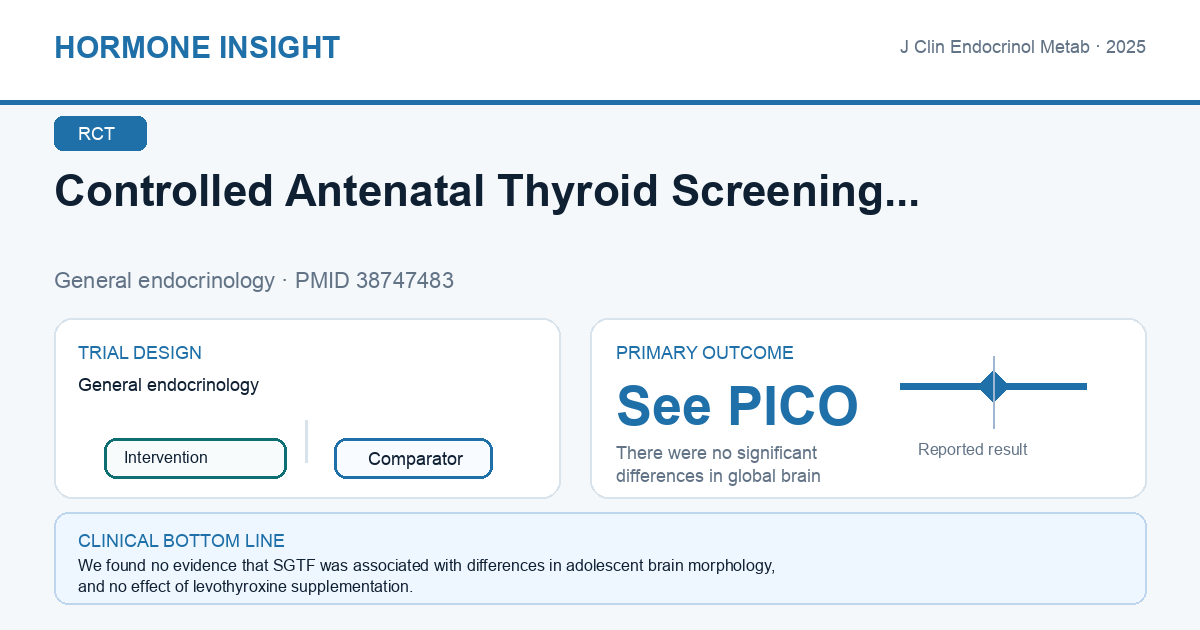
Summary: In a J Clin Endocrinol Metab randomized trial, We found no evidence that SGTF was associated with differences in adolescent brain morphology, and no effect of levothyroxine supplementation. Key reported results included There were no significant differences in global brain volumetric measures between groups, including total gray matter volume (P = .373).
PICO Summary
| Element | Detail |
|---|---|
| Population | The Controlled Antenatal Thyroid Screening (CATS) study randomly assigned mothers with SGTF to levothyroxine or no supplementation from approximately 12 weeks' gestation. At age 9, children born to mothers who were overtreated with levothyroxine had a higher risk of conduct and hyperactivity traits. For the current CATS III study, children underwent neuroimaging studies, including T1-weighted structural magnetic resonance… |
| Intervention | The Controlled Antenatal Thyroid Screening (CATS) study randomly assigned mothers with SGTF to levothyroxine or no supplementation from approximately 12 weeks' gestation. |
| Comparison | The Controlled Antenatal Thyroid Screening (CATS) study randomly assigned mothers with SGTF to levothyroxine or no supplementation from approximately 12 weeks' gestation. |
| Outcome | There were no significant differences in global brain volumetric measures between groups, including total gray matter volume (P = .373). Weak positive correlations were found between maternal TSH, but not FT4, levels and several brain volumes, but these did not survive testing for multiple comparisons. We found no evidence that SGTF was associated with differences in adolescent brain morphology, and no effect of levothyroxine supplementation. |
Controlled Antenatal Thyroid Screening Study III...
Primary RCT · General endocrinology
We found no evidence that SGTF was associated with differences in adolescent brain morphology, and no effect of levothyroxine supplementation.
Expert Commentary
This J Clin Endocrinol Metab randomized trial evaluated Controlled Antenatal Thyroid Screening Study III: Effects of Gestational Thyroid Status on Adolescent Brain Morphology. The abstract describes the study as follows: The Controlled Antenatal Thyroid Screening (CATS) study randomly assigned mothers with SGTF to levothyroxine or no supplementation from approximately 12 weeks' gestation. At age 9, children born to mothers who were overtreated with levothyroxine had a higher risk of conduct and hyperactivity… The main reported results were: There were no significant differences in global brain volumetric measures between groups, including total gray matter volume (P = .373). Weak positive correlations were found between maternal TSH, but not FT4, levels and several brain volumes, but these did not survive testing for multiple comparisons. The authors conclude: We found no evidence that SGTF was associated with differences in adolescent brain morphology, and no effect of levothyroxine supplementation. The clinical value of the result depends on whether the trial population, comparator, follow-up and outcome match the decision in front of the clinician. Can I use this with my patients? The findings can inform discussion when a patient resembles the enrolled population, but they should be interpreted alongside current guidelines, licensed indications, comorbidity, safety monitoring and patient preference. This..
References
Scholz A, McNabb CB, Bloomfield L, et al.. Controlled Antenatal Thyroid Screening Study III: Effects of Gestational Thyroid Status on Adolescent Brain Morphology.. J Clin Endocrinol Metab. 2025-Mar-17. doi:10.1210/clinem/dgae338. PMID: 38747483.