

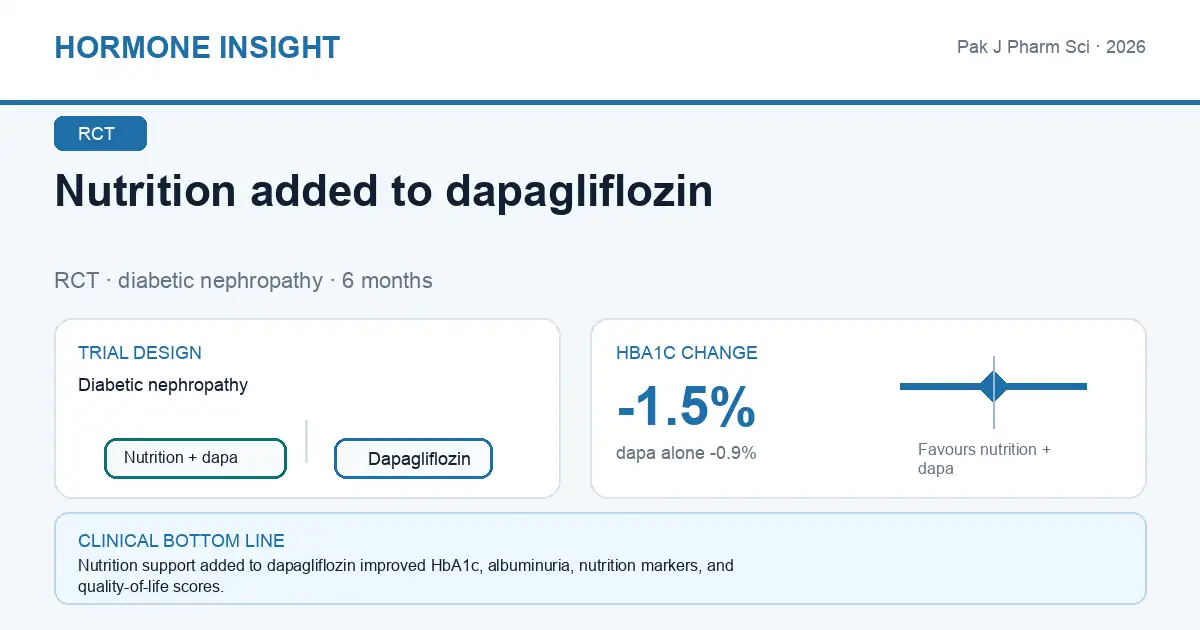
Summary: In a 6-month open-label trial in diabetic nephropathy, adding a structured Mediterranean diet and oral nutritional supplements to dapagliflozin improved glycaemic control, albuminuria, nutritional markers, and quality of life more than dapagliflozin alone.
PICO Summary
| Element | Detail |
|---|---|
| Population | 108 patients with diabetic nephropathy; prospective, randomised, open-label trial assessed at baseline, 3 and 6 months, China. |
| Intervention | Dapagliflozin 10 mg/day plus a structured Mediterranean diet and oral nutritional supplements (observation group). |
| Comparison | Dapagliflozin 10 mg/day alone (treatment group), or conventional care without dapagliflozin (control group). |
| Outcome | Both dapagliflozin arms improved glycaemia and renal parameters over control. The nutrition-plus-dapagliflozin group did better than dapagliflozin alone, with greater reductions in HbA1c (-1.5% vs -0.9%), fasting and postprandial glucose, and UACR (-48% vs -35%), and greater improvements in albumin, ferritin, and SF-36 quality-of-life scores (all p<0.05). Inflammatory markers trended lower. Adverse-event rates did not differ. |
Nutrition added to dapagliflozin in diabetic nephropathy
RCT · diabetic nephropathy · 6 months
Pairing a Mediterranean diet plus oral nutritional supplements with dapagliflozin produced greater falls in HbA1c and albuminuria than dapagliflozin alone, with better nutrition and quality-of-life scores and no extra adverse events.
Expert Commentary
This is a sensible multimodal trial with sound rationale, since diabetic kidney disease combines the perfusion and metabolic problems that SGLT2 inhibitors address with the protein-energy wasting and inflammation that nutrition can target, so additive benefit from pairing the two is plausible and is what the trial reports. The improvements span complementary domains, glycaemia and albuminuria on the one hand, nutritional status and quality of life on the other, which fits the idea that drug and diet act through different mechanisms. I would weigh the design limits the post acknowledges. The trial was open-label, which can inflate apparent benefit, particularly for adherence-sensitive and self-reported outcomes like SF-36, the combined diet-plus-supplement intervention cannot separate the contribution of dietary pattern from supplementation, adherence was self-reported, and at 108 patients over six months it is modest with unknown long-term durability. Can I use this with my patients? Yes, and it aligns with good practice. It reinforces that I should pair SGLT2 inhibitor therapy with structured nutritional support and dietitian referral in diabetic nephropathy rather than relying on medication alone, with nutritional supplements where wasting or hypoalbuminaemia is present, while interpreting the magnitude cautiously given the open-label design.
References
Liu Y, Hu X, Jia J. Adjunctive nutritional intervention improves glycaemia and quality of life in dapagliflozin-treated diabetic patients. Pak J Pharm Sci. 2026;39(1):283–291. doi:10.36721/PJPS.2026.39.1.REG.14163.1